

Japanese Whisky History [2/6]: Shinjiro Torii & Yamazaki
The founding of Yamazaki in 1923 marks the true beginning of authentic whisky production in Japan. Behind this pioneering achievement was a man with an unyielding entrepreneurial spirit: Shinjiro Torii. While many contemporaries considered genuine whisky to be a purely Western product, Torii proved that the right combination of water, climate, and Japanese craftsmanship could produce a world-class malt.
Overview of our Series: The History of Japanese Whisky
- Part 1: From the Beginnings to Today (The Grand Overview)
- Part 2: Shinjiro Torii & Yamazaki – The Birth of an Industry (This Article)
- Part 3: Masataka Taketsuru & Nikka – The Scottish Dream
- Part 4: Post-War Boom & Torys Bars – How Whisky Became a Popular Drink
- Part 5: Karuizawa, Hanyu & Chichibu – Closures and Rebirth
- Part 6: International Success & Future – World Renown and JSMA Standards
Shinjiro Torii: From Wine Merchant to Whisky Visionary
Shinjiro Torii, born in Osaka in 1879, opened his first business, Torii Shoten (the later company Kotobukiya and predecessor of Suntory), in 1899. His first major breakthrough came in 1907 with Akadama Port Wine, a sweet, fortified wine that perfectly matched the Japanese taste of the time and gained nationwide recognition through innovative advertising campaigns.
However, Torii's ambition went further. He was fascinated by Western spirits and quickly realized that importing foreign Scotch would not be enough in the long run. He wanted to create a distinctive, authentic whisky, distilled, aged, and blended in Japan.
The Choice of Location: Why the Yamazaki Valley?
When Torii decided to build his own distillery in 1923, he searched for a place with optimal conditions for aging grain spirits. Many advised him to choose colder regions in the north, but Torii deliberately chose the valley of Yamazaki at the foot of Mount Tennozan, on the border between Kyoto and Osaka Prefectures.
Three decisive factors were crucial:
- Purest Spring Water: The water of Yamazaki had already been famous in the 16th century through tea master Sen no Rikyu. It is soft, low in minerals, and ideal for mashing.
- Climate and Humidity: At the confluence of the three rivers Katsura, Uji, and Kizu, a humid microclimate develops with distinct temperature differences between summer and winter, which intensifies the interaction between wood and distillate during cask maturation.
- Logistical Proximity: The location between the major markets of Kyoto and Osaka offered excellent rail connections.
The Historic Partnership with Masataka Taketsuru
To realize his vision, Torii lacked the technical expertise. He heard of a young chemist named Masataka Taketsuru, who had just returned from Scotland and brought practical distillation experience from Longmorn and Hazelburn.
Torii hired Taketsuru with a ten-year contract as Yamazaki's first distillery manager. Together, they built the distillery in 1923/1924 and installed the first copper pot stills based on the Scottish model. In 1924, the first new make flowed from the stills – a historical milestone.
The First Whisky and the Clash of Directions
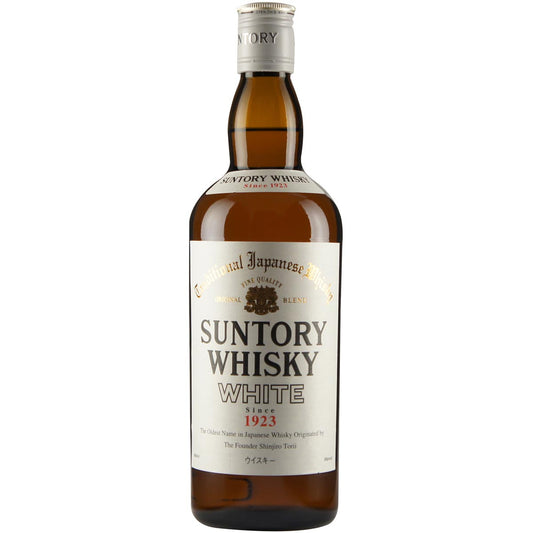
In 1929, Kotobukiya presented its first product: Shirofuda (White Label). However, the response in the domestic market was disappointing. The whisky was strong, smoky, and peaty – very much to the Scottish taste that Taketsuru favored, but too heavy and unfamiliar for most Japanese consumers.
From this experience, Shinjiro Torii drew a fundamental lesson: Japanese whisky could not be a mere copy of Scotland. It had to develop its own identity, characterized by subtlety, elegance, and a harmonious balance. This creative conflict led Taketsuru to move to Hokkaido after his contract expired to found Nikka there, while Torii led Yamazaki to new recipes.
The Breakthrough with Kakubin (1937)
In 1937, Torii achieved his biggest coup to date: the introduction of Kakubin (literally "square bottle" with its distinctive tortoise shell relief). This blend was soft, balanced, subtly sweet, and perfectly harmonized with water and food.
Kakubin became Japan's best-selling whisky, saved the company financially, and formed the financial backbone for all of Suntory's subsequent premium developments – from single malts to famous blends like Hibiki.
Yamazaki Today: The Heart of Japanese Single Malts
Today, Yamazaki is not only the oldest distillery in the country but also a symbol of immense distillation diversity. Unlike in Scotland, where distilleries exchange casks, Japanese distilleries produce the full range of styles in-house. Yamazaki uses differently shaped stills, wooden and steel fermenters, and a wide range of cask types – especially the famous Japanese Mizunara oak.
👉 Discover our range of Japanese whisky and Yamazaki bottlings
What's next in the series?
Learn in Part 3 how Masataka Taketsuru moved to Hokkaido and realized his uncompromising Scottish dream in Yoichi.
Continue to Part 3: Masataka Taketsuru & Nikka ➔Sources
- Brian Ashcraft: Japanese Whisky: The Ultimate Guide, Tuttle Publishing, pp. 28–56.
- Stefan Van Eycken: Whisky Rising, Cider Mill Press, pp. 28–43.
- Stephen Lyman & Chris Bunting: The Complete Guide to Japanese Drinks, pp. 182–186.
- Dave Broom: The Way of Whisky, Mitchell Beazley, pp. 176–180.